Every store has a story — and every story needs the right canvas. Whether that canvas is a sleek, hosted solution like Shopify, a flexible WordPress + WooCommerce combo, or a custom-built eCommerce platform, the decision shapes not just how your store looks, but how it feels to manage and grow. At Codroon, we’ve built everything from handcrafted eCommerce platforms to polished Shopify storefronts. Over time, one truth has become clear: the “best” option isn’t universal. It depends on who you are, what stage you’re in, and what kind of creative control you’re ready to handle. Let’s break it down — not just by features, but by how each approach fits the story you’re trying to tell.
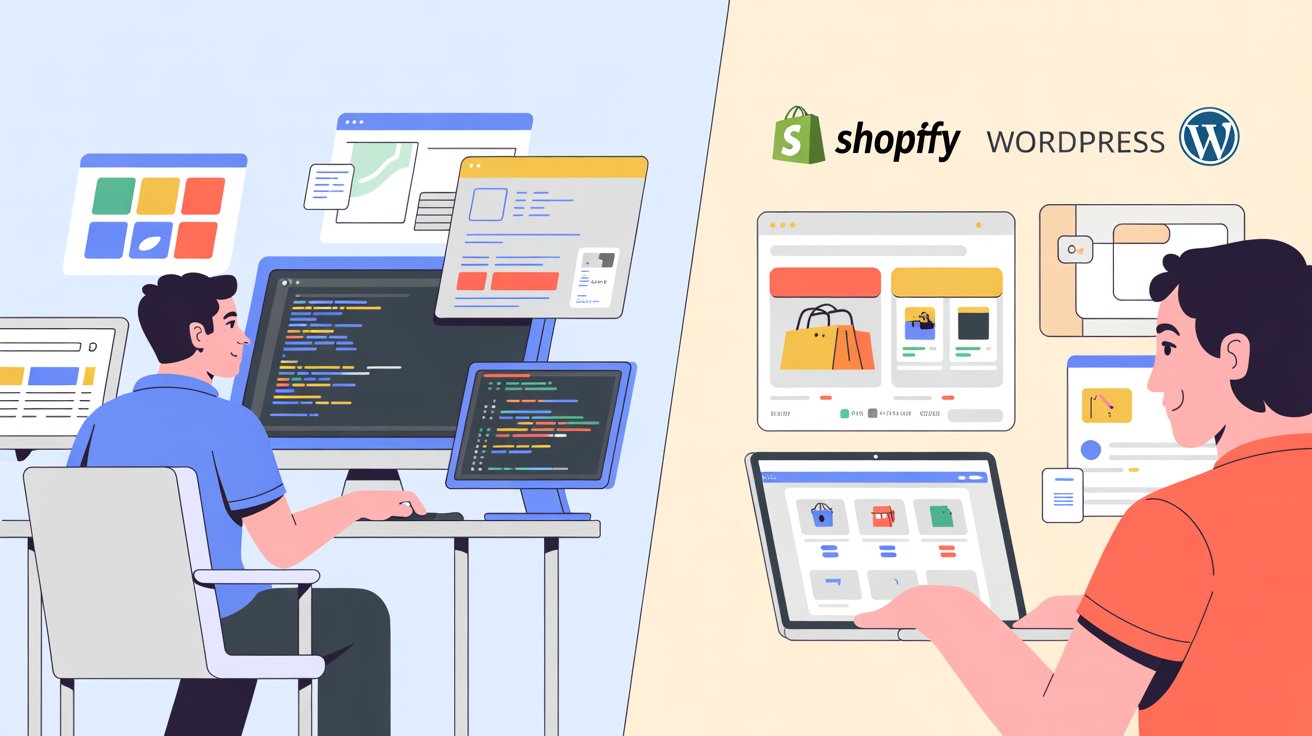
Shopify is like renting space in a beautifully designed art gallery. Everything works: the lighting, the security, the foot traffic. You pay for ease and reliability — and you get it. Shopify handles hosting, payments, security, and scalability out of the box. You can launch a store in a day, connect your domain, and sell globally without touching infrastructure. The admin panel feels like it was made for people who want to focus on products, not plugins. But here’s the trade-off: you’re painting within the lines. Shopify’s templates and themes are well-designed, but limited. Extending functionality beyond their ecosystem means either installing paid apps or diving into Liquid, their proprietary templating language. You can customize, but you can’t redefine. Cost: Starts around $29/month, plus transaction fees and app subscriptions. Best for: Entrepreneurs, DTC brands, and startups who want to focus on growth over development. AI note: Shopify’s AI product descriptions and “Magic” features now auto-generate copy, saving time for smaller teams.
WordPress + WooCommerce: The Flexible Workshop
If Shopify is a gallery, WooCommerce is an open workshop — slightly messier, but entirely yours. Built on WordPress, it gives you freedom to customize almost everything. You can design your store however you like, integrate unique user experiences, and host wherever you want. The plugin ecosystem is massive — payments, SEO, analytics, shipping, memberships — all within reach. That flexibility, however, comes with maintenance. WordPress and WooCommerce require updates, backups, and occasional debugging. A few wrong plugin combinations can slow performance or create compatibility issues. It’s the price you pay for freedom.
Shopify: The Clean, Reliable Gallery
For design-focused teams, it’s a sweet spot: visually expressive, technically manageable, and cost-effective if you don’t mind getting your hands dirty. Cost: Hosting (~$10–$30/month) + premium themes/plugins (varies). Best for: Small-to-mid-size businesses, design agencies, and teams that want creative control without building from scratch. AI note: Pairing WooCommerce with OpenAI or Gemini plugins lets you generate product descriptions, meta tags, and even automate inventory categorization.
Custom eCommerce: The Blank Canvas

By Codroon
Top Author
The trade-off? Time and cost. You’ll need a full development cycle: design, backend logic, QA testing, and continuous deployment. But the reward is scalability and identity — a store that feels like your brand, not another Shopify clone. Cost: Starts at $5K–$20K+ for MVPs; more for full-scale builds. Best for: Enterprises, funded startups, or technical teams needing total flexibility. AI note: Modern frameworks like Next.js Commerce and Hydrogen (Shopify’s headless SDK) let you blend custom experiences with AI-driven personalization — from recommendations to UX optimization.
Choosing What Fits You
Here’s how we usually frame the decision at Codroon
By Codroon
Top Author
Choosing between Shopify, WordPress, and a custom platform isn’t about right or wrong — it’s about fit. Shopify feels like a beautifully framed painting. WooCommerce feels like a creative studio. A custom build feels like an empty canvas waiting for your imagination. At Codroon, we’ve learned that the best eCommerce platform is the one that lets your brand breathe — one that supports creativity, scales gracefully, and stays invisible when it needs to. Because at the end of the day, technology should serve your story — not steal the spotlight.