
APIs are the backbone of every modern SaaS platform — they connect systems, power integrations, and carry the weight of user interactions at scale. But building APIs that stay reliable as you grow is more than an exercise in syntax. It’s an exercise in architecture, foresight, and restraint. At Codroon, we’ve built and maintained APIs for startups and enterprise clients alike. Along the way, we’ve learned that scalability isn’t about servers or cloud regions — it’s about clarity, consistency, and evolution. Here’s what matters most when designing APIs for real-world scale in 2026.
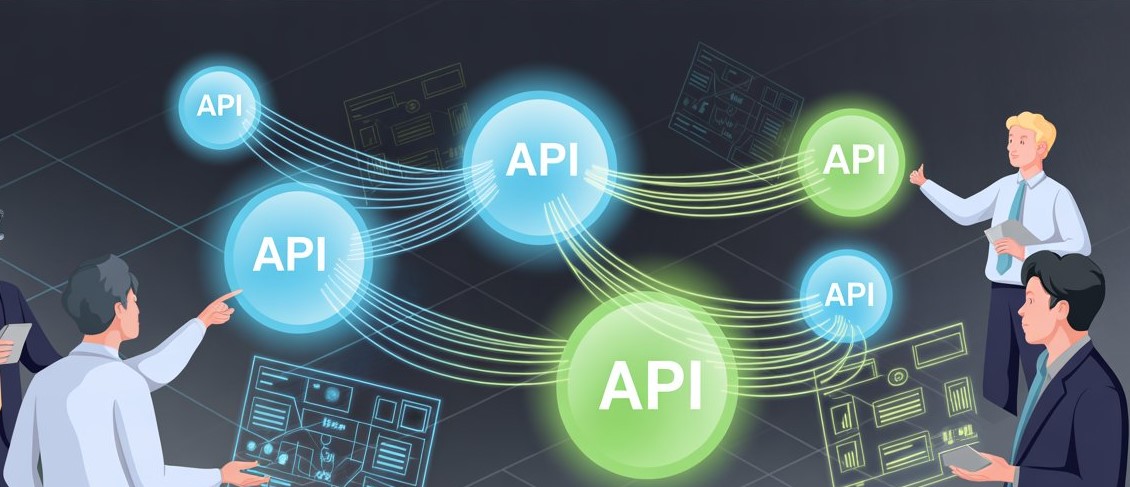
Before a single endpoint is written, we spend time mapping the business domains. An API that mirrors the business logic is easier to reason about, test, and evolve. We use Domain-Driven Design (DDD) principles to organize services around clear ownership: billing, authentication, analytics, etc. Each domain owns its data and logic, with well-defined contracts for communication. This means when your product grows, you can scale individual services, not the entire monolith. It’s the difference between an API that grows elegantly and one that collapses under its own complexity.
Favor Consistency Over Cleverness
Clever APIs impress engineers; consistent APIs help teams ship faster. Our engineering rule at Codroon is simple: every new endpoint should look and behave like the last one. That means predictable naming (/users/:id), uniform error structures, and consistent response patterns. We standardize all of this in an OpenAPI (Swagger) schema from day one. This gives us instant documentation, test automation hooks, and automatic SDK generation for clients. Predictability scales better than creativity.
Start With Domain Clarity
Use the Right Paradigm for the Problem
There’s no one-size-fits-all approach. REST remains a solid choice for most APIs, but we often mix in GraphQL for frontends that need flexibility, or tRPC for internal service-to-service calls where type safety is critical. REST → simple, cacheable, perfect for public APIs GraphQL → customizable queries, ideal for multi-client ecosystems tRPC → type-safe and blazing fast, great for internal SaaS systems Choosing wisely avoids both overengineering and underperformance.
Monitor Like Your Business Depends on It (Because It Does)

By Codroon
Top Author
Automate Tests and Version Early
The hardest part of scaling APIs isn’t traffic — it’s change. We automate contract tests to ensure updates don’t break existing consumers. Each API version is tracked in a Postman collection and integrated into CI/CD pipelines. That lets us ship confidently while maintaining backward compatibility. At Codroon, we treat versioning as a design principle, not an afterthought. If your clients depend on your API, they deserve stability.
Don’t Forget the Human Element
By Codroon
Top Author
At Codroon, our philosophy is simple
A scalable API isn’t the one that handles a million requests — it’s the one a new developer can understand in an hour. Clarity scales. And in 2026, that’s the real mark of great engineering.