
There’s a moment that every developer knows—the screen feels alive, ideas spill straight from thought to code, and you’re not typing so much as sketching logic. That’s vibe coding. It’s the rare alignment between focus and flow where creativity becomes the compass. At Codroon, we’ve seen it happen on real projects. A quiet hour turns into a burst of design insight, a prototype evolves into something worth keeping, and a stray “what if” becomes a production feature. But we’ve also watched vibe coding crash into chaos—when that inspired rhythm leads to untracked commits, hidden coupling, and confusing intent. So, is vibe coding safe? Maybe not in the traditional sense. But when you understand its shape, and give it the right boundaries, it can be one of the healthiest creative patterns in engineering.
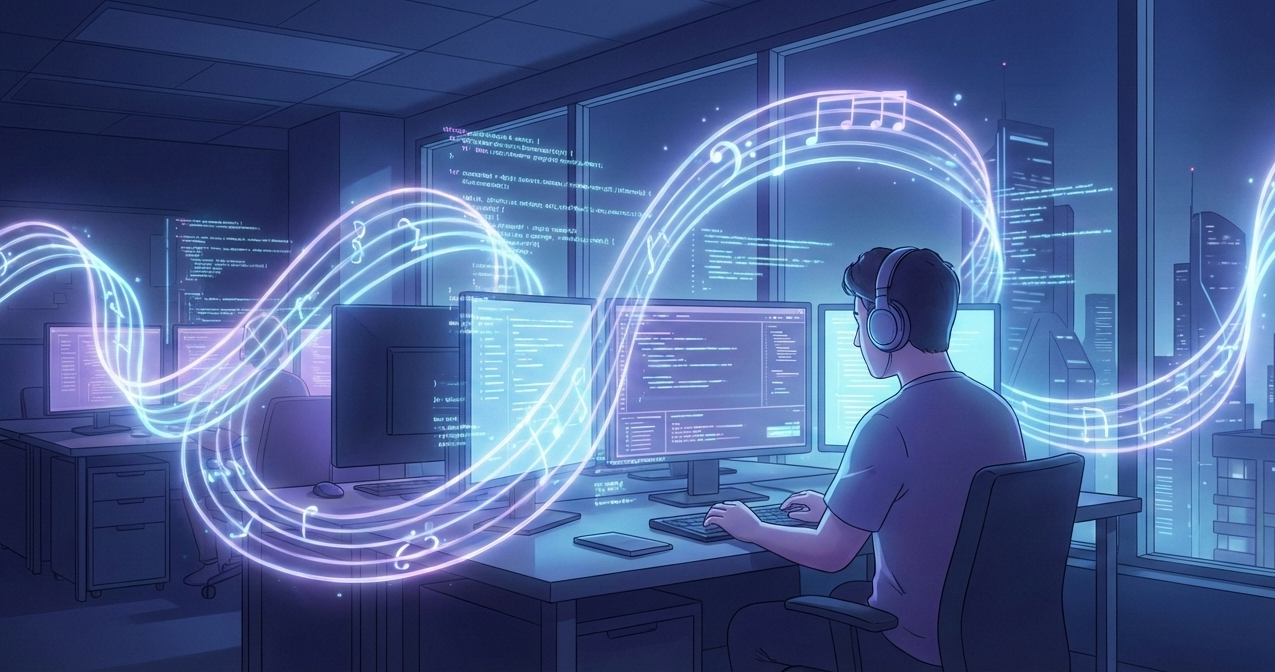
Good vibe coding is like good animation: the timing, the easing, and the transitions matter as much as the result. When you’re in that state of flow, you need a platform that disappears. Waiting for builds or switching tabs breaks that sense of motion.
The platforms that make vibe coding possible understand the aesthetics of responsiveness
Instant feedback loops — frameworks like Svelte, Flutter, and Vite make the code respond like sketching lines on paper. Live previews — seeing your code react in real time reinforces your sense of touch. Collaborative coding spaces — the digital equivalent of pair painting; you’re not just working together, you’re riffing on rhythm. Gentle automation — AI-assisted tools that autocomplete, refactor, and generate snippets so you can stay in composition mode instead of wrestling syntax. When the feedback feels tactile, creativity grows. The code becomes a medium, not a barrier.
Designing for Flow
The Hidden Structure Beneath the Chaos
Here’s the paradox: the most expressive codebases often have the strongest structure underneath. It’s like a stage set—you don’t see the scaffolding from the audience, but it holds everything up. At Codroon, we’ve learned that vibe coding only works when it lands on a foundation of reliability. We’ve built tools that let developers move quickly while automatically handling linting, testing, and type checks in the background. It’s not about constraining creativity; it’s about protecting it. That structure gives developers the confidence to experiment. You can push an idea knowing that even if it breaks, the system will catch it. That’s the safety net that turns chaos into choreography.
The Feel of Code
There’s a tactile element to good code that we don’t talk about enough. When you’re in flow, you feel the indentation, the spacing, the way the functions fold and unfold. It’s not aesthetic in the visual sense—it’s aesthetic in the emotional sense. Sarah Drasner often talks about the emotional dimension of front-end work: how design and logic intertwine, how code becomes a medium for empathy. Vibe coding is the same—your intent transfers directly through the keys, and when you reread it later, you can tell what mood you were in. That’s why structure matters. Without good naming, clean abstractions, and a consistent visual rhythm, that emotional trace gets lost. The next engineer can’t feel what you felt. And suddenly, the code stops communicating.
Culture as Canvas

By Codroon
Top Author
When Vibes Go Wrong
Of course, there’s a shadow side. Vibe coding without structure can look like a Jackson Pollock painting of dependencies. You can tell someone had fun, but you don’t know where to step. The platforms that encourage this tend to mistake speed for flow. Instant deploys, one-click commits, AI tools that write half your code without context—they all feel empowering at first. But without thoughtful design, they flatten creativity into chaos. We’ve seen this at Codroon: teams that lean too hard on speed often burn out on maintenance. The fix isn’t slowing down—it’s adding reflection. Platforms should make the thinking process visible, not invisible.
The Aesthetics of Cleanup
After every vibe session, there’s that quiet moment of reckoning. You scroll through your code and see all the TODOs, the quick hacks, the temporary constants that were never meant to last. It’s messy, but it’s also honest. That cleanup phase is where artistry meets craft. You refactor not just to make the code work better, but to make it feel better—to restore symmetry, remove noise, and let the logic breathe. In teams that value vibe coding, this is where mentorship happens. Senior engineers don’t scold—they sculpt. They take that raw expression and help refine it into something enduring.
Flow as a Design Problem
By Codroon
Top Author
So, Is It Safe?
Vibe coding will never be “safe” in the procedural sense. It’s spontaneous, emotional, and human. But that’s also what makes it irreplaceable. When supported by the right platforms and surrounded by a culture of gentle discipline, vibe coding becomes a renewable resource for creativity. It’s how new patterns emerge, how teams rediscover their love for building, and how complex systems stay alive.
At Codroon, we think of it this way
Creativity without structure is noise. Structure without creativity is decay. Flow sits beautifully in between. Vibe coding isn’t a rebellion—it’s a reminder that engineering is still an art form.